



The Science
The Biology of Resilience: A Science-Backed Guide to Wheatgrass
Clinical Literature Review
Note: The following summaries are provided for educational purposes to illustrate the biological mechanisms of fresh Triticum aestivum (wheatgrass) as documented in peer-reviewed scientific literature. These studies do not constitute medical advice or claims that our products diagnose, treat, or cure any disease.
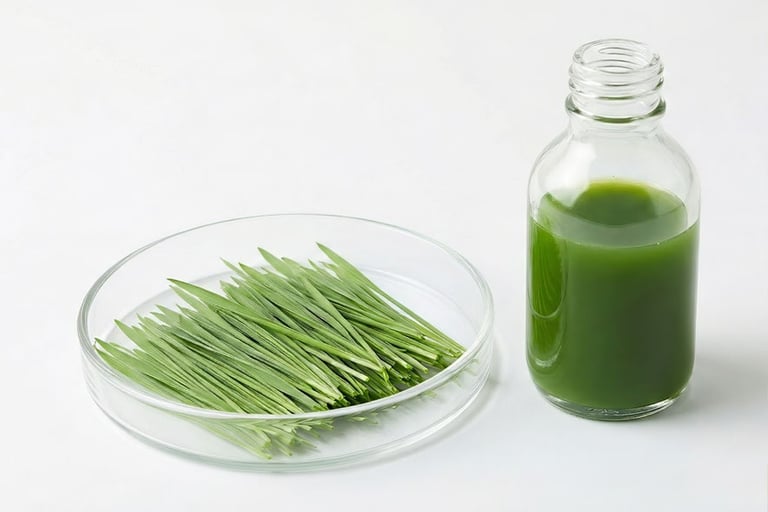
About this page
Explore our collection of articles on wheatgrass, a remarkable superfood known for its numerous health benefits. Discover how it impacts various health conditions and how it can enhance your well-being. This site serves as your gateway to understanding the many ways wheatgrass can contribute to a healthier lifestyle.
We encourage you to delve into each category, where you'll find insightful articles detailing the effects of wheatgrass on different topics.
Every article in this database is cross-referenced with peer-reviewed clinical trials and human studies. We believe in transparency over hype.
Each page includes direct links to the studies DOI (Digital Object Identifier) numbers, , when available, so you can review the primary research yourself. We prioritize linking to PubMed and DOI.org to ensure you reach the most stable, peer-reviewed versions of these studies. Where a study is behind a paywall, we provide links to ResearchGate or the original Journal Archive to ensure transparency. If a link appears broken, let us know, and we'll try to find you the study in question.
Hematology & Oxygenation
Blood Health & Cognitive Endurance
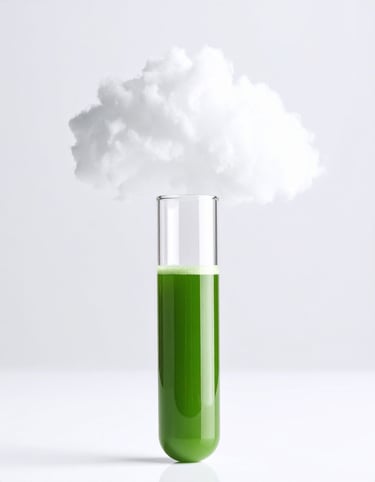
This series explores the biological relationship between plant chlorophyll and human hemoglobin. Discover how wheatgrass acts as a molecular "scaffolding" to support red blood cell production, optimize oxygen delivery to the brain, and provide a natural, stimulant-free foundation for cognitive endurance.
Gastroenterology & Digestive Health
Restoring the Gut Barrier
Explore the science of how wheatgrass juice acts as a "biological liquid bandage" for the digestive tract. This series breaks down the clinical evidence for treating inflammatory bowel conditions (IBD), the role of living enzymes in nutrient absorption, and why the "empty stomach rule" is the key to unlocking the juice’s therapeutic potential.
Oncology & Supportive Care
Biological Resilience During Treatment
This series examines the role of wheatgrass juice as a supportive "adjunct" therapy in oncology. Based on clinical trials, we explore how its unique enzymatic profile can help mitigate the toxic side effects of chemotherapy, protect healthy bone marrow, and provide a "cellular shield" against oxidative stress during recovery.
Metabolic Health & Blood Sugar
Stabilizing the Metabolic Curve
Explore how wheatgrass juice acts as a "metabolic anchor." This series breaks down the clinical evidence regarding glycemic control, the enzymatic slowing of carbohydrate digestion, and the role of bioavailable magnesium in maintaining insulin sensitivity and healthy lipid profiles.
Dermatology & Autoimmune Health
Calming the Internal Storm
This series explores the role of wheatgrass juice as a powerful immunomodulator. Rather than blindly "boosting" the immune system, wheatgrass helps restore balance to overactive immune responses. Learn the science of cytokine regulation and how it addresses the root causes of systemic inflammation, from autoimmune conditions to chronic skin disorders like eczema and psoriasis.
The Reality of Clinical Funding: A Note on Research Scale
A frequent question we receive from our analytical customers is: "If the clinical data is this promising, why aren't there massive, multi-national Phase III trials like we see in pharmaceuticals, and why isn't this sold in pharmacies?"
The answer lies in the economics of modern medicine and the stubborn reality of plant biology.
1. The "Patent Paradox"
The Cost: A standard Phase III clinical trial required to bring a new drug to market costs between $30 million and $100 million.
The Incentive: Pharmaceutical companies fund these trials because they can patent the resulting molecule, granting them 20 years of exclusivity to recoup that massive investment.
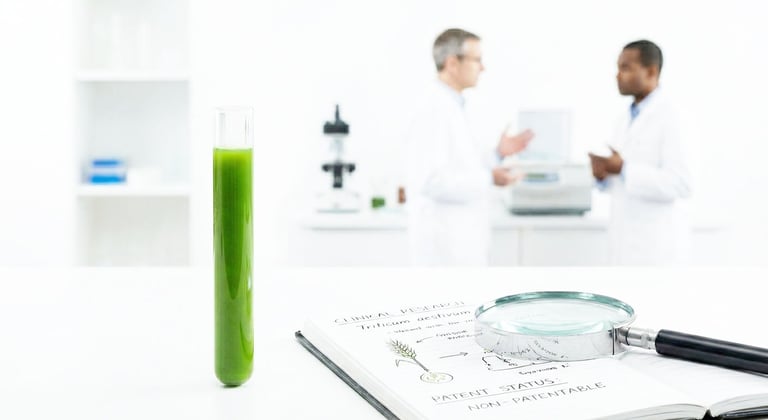
The Reality:Triticum aestivum (wheatgrass) is a natural, living organism. It cannot be patented. Therefore, no pharmaceutical entity has a financial incentive to invest millions in proving its efficacy, as they cannot own the result.
2. The Preservation Paradox (The 15-Minute Rule)
The Biological Wall: Even if a corporation wanted to commercialize it, they face an impossible biological hurdle. Despite decades of food science and millions in R&D, the scientific community has completely failed to invent a way to stabilize and preserve living chlorophyll and active plant enzymes.
The Degradation: The moment the grass is crushed and exposed to oxygen, enzymatic degradation begins. Freeze-drying, HPP (high-pressure processing), bottling, and pasteurizing completely destroy the fragile bio-actives (like Superoxide Dismutase) that make the plant so powerful.
The Reality: The only scientifically valid way to absorb 100% of the enzymatic benefit is to extract the juice and consume it within 15 minutes of pressing. This makes living wheatgrass a logistical nightmare for global corporate supply chains, which is exactly why it must be grown locally and pressed in your own kitchen.
3. The Value of Independent Science
Because of this funding and preservation gap, the research you see in our library—from the Scandinavian Journal of Gastroenterology to Indian Pediatrics—is arguably more significant. These studies were not funded by a corporation looking to sell a proprietary drug. They were funded by university grants, hospitals, and independent scientific bodies driven purely by the desire to solve patient suffering.
When a study shows that fresh wheatgrass reduces chemotherapy side effects or rebuilds hemoglobin, it is a finding born of pure scientific inquiry, unclouded by the pressure to generate shareholder value.
4. Open Source Inquiry: Be Your Own Chief Science Officer
We selected the studies in our library because they meet our strict criteria for scientific merit and relevance to fresh juice. However, science is never finished. We encourage you to dig deeper and verify the data yourself.
Where to Search:
PubMed (pubmed.ncbi.nlm.nih.gov): The global standard for biomedical literature.
Google Scholar (scholar.google.com): A broader search engine for academic papers and patents.
What to Search (The Keywords): To avoid the "noise" of lifestyle blogs, use these specific medical search terms:
"Triticum aestivum fresh juice"
"Wheatgrass antioxidant activity"
"Chlorophyllin hematopoiesis"
"Triticum aestivum anti-inflammatory"
The Common Pitfalls (Read Carefully): As you explore the research, be aware of two common traps in the literature:
Fresh Juice vs. Powder: Many studies use ethanolic extracts or freeze-dried powders. While valid for basic chemical analysis, these do not reflect the enzymatic potency of the fresh, raw juice you are drinking. Always check the "Methods" section to see how the wheatgrass was prepared.
Grass vs. Germ: Ensure the study is testing the grass (the green blade), not the wheat germ (the seed). "Fermented Wheat Germ Extract" (often called Avemar) is a different biological product with a different nutrient profile.
The Invitation: If you find a high-quality, peer-reviewed study on fresh Triticum aestivum that you think belongs in our library—whether it supports our pillars or challenges them—send it to us. We are building this brand on truth, not dogma.

Let’s design your daily protocol.
Reach out to discuss your routine, your goals, and find the plan that fits your biology..
Contact
hola@elchupitosano.com
+358 400 772 999
El Chupito Sano © 2026. All rights reserved.

Legal Disclaimer: This product is a food supplement (zumo vegetal). Not intended to diagnose or cure disease. If you have a wheat allergy, consult your doctor (though wheatgrass is gluten-free).