
Natural Remedies for Chemotherapy Side Effects
Discover how managing chemotherapy side effects naturally with wheatgrass can provide vital support to your hematological system. Learn about the benefits of wheatgrass in protecting progenitor cells and reducing toxicity during chemotherapy treatment.
ONCOLOGY & SUPPORTIVE CARE
3/7/20262 min read
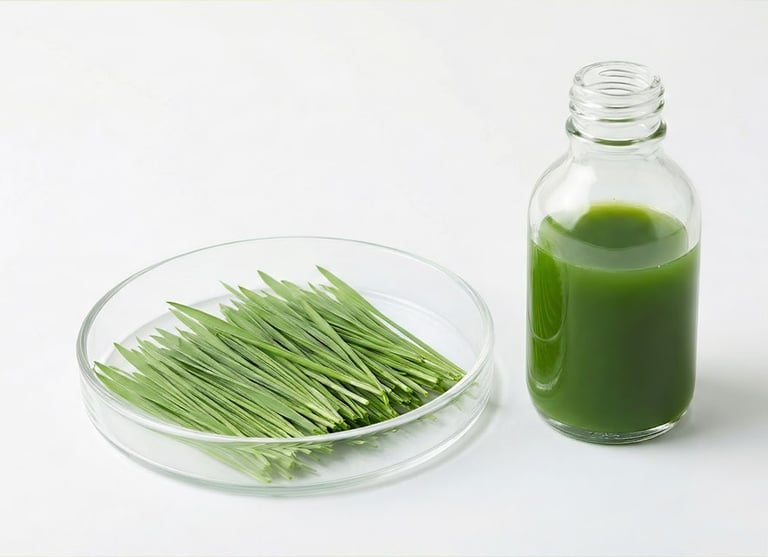
Managing Chemotherapy Side Effects: How Wheatgrass Protects Healthy Cells
The "Collateral Damage" of Treatment
Chemotherapy is designed to target rapidly dividing cells. While this effectively attacks cancer, it also inadvertently targets other fast-growing cells in the body—most notably in the bone marrow. When bone marrow is suppressed (a condition known as myelotoxicity), the body’s production of white blood cells and red blood cells drops. This leads to extreme fatigue, a weakened immune system, and often requires doctors to delay life-saving treatments or use bone marrow-stimulating drugs.
The Mechanism: Hematological Protection
Wheatgrass acts as a biological "buffer" for the hematological system. It doesn't interfere with the chemotherapy’s ability to target the tumor, but it provides systemic support to the healthy cells trying to survive the treatment:
Protecting the Progenitors: The bio-matrix of wheatgrass provides high concentrations of chlorophyll and minerals that support the marrow's "progenitor cells."
Reducing Toxicity: Studies suggest that the antioxidants in the juice help neutralize the toxic metabolites produced as the body processes chemotherapy drugs, specifically reducing the "insult" to the blood-forming organs.
The Clinical Evidence: The Breast Cancer Trial
In a pilot study published in Nutrition and Cancer, researchers followed patients undergoing FAC chemotherapy for breast cancer. One group received 60cc (about 2oz) of wheatgrass juice daily during the first three cycles of treatment.
The Results:
Lower Myelotoxicity: Patients drinking wheatgrass juice had significantly lower levels of hematological toxicity.
Reduced Need for Drugs: The wheatgrass group required fewer doses of Epoetin and G-CSF (bone marrow stimulants) compared to the control group.
Treatment Continuity: Importantly, the juice did not diminish the effectiveness of the chemotherapy, but it allowed the patients to maintain healthier blood counts during the process.
A Note on Integration
When using wheatgrass as supportive care, it is vital to work in tandem with an oncology team. The goal is to provide the body with the "raw materials" for repair so that the medical treatment can be completed with fewer interruptions and less physical depletion.
Scientific References
The Study: Wheat grass juice may improve hematological toxicity related to chemotherapy in breast cancer patients: a pilot study. Authors: Bar-Sela, G., et al. Published In: Nutrition and Cancer (2007) Access via: https://doi.org/10.1080/01635580701308083
The Study: The Therapeutic Role of Triticum aestivum (Wheatgrass) in Inflammation and Cancer. Authors: Chauhan, M. Published In: Journal of Clinical and Diagnostic Research (2015) Access via: https://doi.org/10.7860/JCDR/2015/15442.6957
Contact
hola@elchupitosano.com
+358 400 772 999
© 2026. All rights reserved.

Legal Disclaimer: This product is a food supplement (zumo vegetal). Not intended to diagnose or cure disease. If you have a wheat allergy, consult your doctor (though wheatgrass is gluten-free).