


Calming the Storm: Skin Health Insights - Psoriasis & Eczema
Explore how conditions like eczema and psoriasis reflect internal immune issues. Discover the role of signaling proteins and how wheatgrass can help support skin health and provide relief from inflammation.
DERMATOLOGY & AUTOIMMUNE HEALTHENGLISH
3/9/20262 min lukea
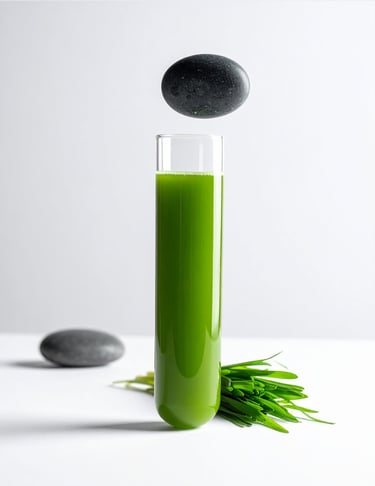
The Internal Anchor for External Relief: Wheatgrass for Eczema and Psoriasis
The Skin as a Mirror
When the skin becomes red, itchy, or scaly—as seen in Eczema and Psoriasis—it is rarely a "surface" problem. It is an external manifestation of an internal immune system that has lost its sense of proportion. In these conditions, the body’s T-cells mistakenly trigger a massive inflammatory response in the skin layers. To find lasting relief, we have to look past topical creams and address the signaling proteins driving the flare-up from the inside.
The Mechanism: Stopping the "Red Alert"
Wheatgrass juice addresses skin inflammation through a process of cellular signaling.
The TNF-α Brake: Research indicates that the bioactive compounds in wheatgrass (specifically the chlorophyll and flavonoids) help suppress Tumor Necrosis Factor-alpha (TNF-α). This is the primary protein responsible for the rapid skin cell turnover seen in Psoriasis and the intense redness in Eczema.
Strengthening the Barrier: While the immune system is calmed, the high levels of Vitamin A and Zinc in wheatgrass provide the structural support needed to rebuild the "skin barrier." A stronger barrier means fewer environmental triggers can penetrate the skin, reducing the frequency of future flare-ups.
The Evidence: Suppressing Localized Inflammation
Studies on the topical and internal use of wheatgrass extracts have shown a marked ability to inhibit the pathways of "Distal Inflammation." By reducing the systemic inflammatory load, the skin is given a "window of peace" to begin the process of re-epithelialization—the growth of healthy, calm skin cells to replace the damaged, inflamed ones.
The Application: The 30-Day Reset
Because skin cells take roughly 28 days to regenerate, the benefits of wheatgrass for dermatology are cumulative. Consistent daily consumption (30ml–60ml) ensures that as new skin cells are formed in the deeper layers, they are developed in a biological environment that is low in inflammatory signals and rich in repair-focused nutrients
Scientific References
The Study: Phytochemical screening and antioxidant activity of Triticum aestivum (Wheatgrass). Authors: Padalia, S., et al. Published In: International Journal of Research in Ayurveda and Pharmacy (2010) Access via: https://www.researchgate.net/publication/358747522_Phytochemical_Characterization_of_Triticum_Aestivum_wheat_grass
The Study: The Therapeutic Role of Triticum aestivum (Wheatgrass) in Inflammation and Cancer. (Focus on TNF-α suppression). Authors: Chauhan, M. Published In: Journal of Clinical and Diagnostic Research (2015) Access via: https://doi.org/10.7860/JCDR/2015/15442.6957
Contact
hola@elchupitosano.com
+358 400 772 999
El Chupito sano © 2026. All rights reserved.

Legal Disclaimer: This product is a food supplement (zumo vegetal). Not intended to diagnose or cure disease. If you have a wheat allergy, consult your doctor (though wheatgrass is gluten-free).